
Disclaimer: As an Amazon Associate, I earn from qualifying purchases at no extra cost to you.
Learning how to clean a food dehydrator is an absolute non-negotiable household skill for anyone who loves preparing healthy dried fruits, homemade beef jerky, and fresh organic herbs at home. There is nothing more disappointing than opening your favorite preservation appliance only to find a sticky layer of baked-on fruit sugars, stubborn grease grids, or a foul, stale odor that ruins your next batch of snacks. Because steady low-temperature heat circulates inside the machine for hours, evaporating organic moisture easily bonds to the interior tray walls, creating a tough sugary varnish that degrades structural components over time.
Mastering the correct preservation sanitization techniques allows you to extend the operational lifespan of your appliance for years while ensuring your dried foods remain perfectly fresh and safe to eat. According to Wikipedia’s Food Preservation Technology Guide, controlling organic moisture crystallization and keeping internal high-velocity heating chambers completely free from carbonized residues are the primary scientific secrets to maintaining steady air circulation and stopping harmful bacterial growth inside domestic countertop cooking systems.
In this ultimate comprehensive masterclass, we will break down the absolute best strategies on how to clean a food dehydrator to preserve heating coil performance, protect fragile plastic mesh liners, and lock in maximum countertop hygiene.
(Note: Essential kitchen cleaning accessories can be found on Amazon. You can check current prices for food-grade descaling solutions or specialized soft detail brushes whenever you are ready to learn how to clean an air fryer or master how to clean a food dehydrator at home.)[ Check Price on Amazon ]
🔍 The Science of Sticky Sugar and Protein Buildup
Before we dive into the specific step-by-step methods, it is incredibly important to understand why deep countertop preservation systems turn dirty so rapidly and how to clean a food dehydrator without causing micro-scratches to the sensitive plastic trays. Every single time your machine dries out thin fruit slices or marinated raw meats, heavy organic elements vaporize, condense, and splatter across the entire interior ceiling frame.
When planning how to clean a food dehydrator, you must understand that raw fructose and animal proteins harden into a tough, water-resistant lacquer as the machine cools down. If you do not research how to clean a food dehydrator correctly, this hidden organic glaze will decompose quietly, releasing harmful smoke and acrid chemicals right into your next fresh snack portions.
Another critical factor that impacts how to clean a food dehydrator correctly is the physical shape of the drying racks themselves. Whether you use a vertical stackable tray system or a heavy-duty horizontal commercial-style cabinet box, the narrow grid patterns trap fine debris and sticky juice drops stubbornly.
Over time, these trapped lines turn into a permanent bio-film layer that traditional quick rinsing under a kitchen tap cannot remove safely. Furthermore, according to the official USDA Food Safety Information Guidelines, the dark, tightly closed cabinet spaces turn into the absolute perfect breeding ground for dangerous foodborne bacteria colonies if your routine on how to clean a food dehydrator is completely ignored after long weekend meal preparations.
🧪 Method 1: The Dish Soap and Warm Water Soak Protocol
The absolute best and safest way on how to clean a food dehydrator inside a modern kitchen involves a simple multi-stage process using warm water, premium grease-cutting dish soap, and a soft nylon brush. This brilliant strategy removes sticky fruit residues easily from the grates without damaging the sensitive plastic or metal structural grids.
To begin this process, unplug the electrical power cord completely from your home wall outlet and let the internal heating elements cool down for at least 30 minutes to prevent thermal warping. If you want to master how to clean a food dehydrator, slide the entire stack of individual drying trays out of the outer machine housing frame box cleanly.
Next, remove the flexible plastic mesh sheets or silicone fruit leather roll sheets from the bottom of the trays to expose the hidden debris zones underneath. When discovering how to clean a food dehydrator cleanly, you must never use sharp metal knives or harsh steel wool scrubbers to scrape away stuck jerky pieces because they scratch the structural surface frames.
Fill your kitchen sink with warm water and pour two tablespoons of premium liquid dish soap directly into the basin to create a rich sudsy bath setup. Submerge all the dirty plastic drying trays fully into the water, allowing them to soak undisturbed for 20 to 30 minutes continuously to make how to clean a food dehydrator a much faster task.
This soaking stage is a critical secret regarding how to clean a food dehydrator because the warm soapy water penetrates and softens the dried sticky sugars safely. Once the soaking window closes, take a soft sponge and wipe down the interior and exterior walls gently until all oily textures vanish from the trays.
Rinse the components thoroughly under clean running tap water to remove any soap traces completely. To finish how to clean a coffee maker or finish your monthly routine on how to clean a food dehydrator cleanly, use a dry cotton towel to dry all parts fully before assembly.
🍋 Method 2: The Advanced Baking Soda Odor Treatment
If you are dealing with ancient, baked-on grease layers from making thick batches of teriyaki beef jerky, utilizing an organic baking soda paste is another exceptional strategy on how to clean a food dehydrator cleanly.
Baking soda is a mild alkaline powder that chemically breaks down acidic fat bonds and neutralizes strong spicy aromas without scratching underlying plastic surfaces. To execute this routine correctly, mix three tablespoons of baking soda with one tablespoon of fresh water inside a small cup, stirring until it forms a thick paste like white cream.
Apply this white paste directly onto the stubborn grease zones inside the tray grids using a soft-bristled toothbrush tool. When reviewing how to clean a food dehydrator thoroughly, letting this mixture rest on the grime for twenty minutes allows the alkaline base to lift the carbonized crusts effortlessly.
Take a damp soft sponge and scrub the paste away using gentle circular motions. The non-scratch abrasive texture of the baking soda will dissolve the brown spots smoothly without aging the delicate plastic seals. If you learn how to clean a food dehydrator via alkaline solutions, you protect the base from corrosive rust spots.
Once finished, wipe out the white residue using a wet microfiber cloth, let the machine cool down, and check the corners for any hidden paste lines. This easy method shows how to clean a meat tenderizer or clean modern appliances safely every single month without toxic industrial chemical fumes.
💨 Method 3: The Vinegar Spray Sanitization Technique
For stubborn internal odors like old dried onions or garlic powders, running a natural white vinegar spray wash is a legendary technique on how to clean a food dehydrator without scrubbing.
This process uses natural acetic acid currents to penetrate the hard-to-reach areas around the internal air distribution channels. To mix this deodorizing solution safely, take a clean plastic spray bottle and mix equal parts of distilled white vinegar and warm filtered water.
Remove all trays from the machine base box, and mist the internal plastic walls and the base floor lightly using the vinegar spray. When planning how to clean a food dehydrator interior walls, ensure you do not spray liquid directly into the open fan vents or the electrical motor housing box assembly.
Allow the acidic vinegar droplets to rest on the plastic surfaces for 10 minutes to dissolve invisible grease films and kill lingering mold spores cleanly. When practicing how to clean a food dehydrator with natural acids, you guarantee that no chemical chemical aftertaste transfers to your healthy dried apples later.
Take a clean damp microfiber cloth and wipe down the interior walls, removing the loosened oil layers easily. Leave the front cabinet door or the top lid fully open for two hours to allow the pungent vinegar aroma to clear out into your kitchen space, leaving the appliance smelling perfectly clean, fresh, and neutral.
🔍 Method 4: Cleaning the Horizontal Fan and Heating Element
While the removable trays are very easy to manage, learning how to clean a food dehydrator correctly demands strict attention to the horizontal fan blade assembly and heating coil housing located at the back or bottom of the cabinet.
If your ongoing routine on how to clean a food dehydrator ignores this rear ventilation grid, splattered oil droplets will smoke violently during future food drying runs. To clean this area safely, ensure the machine is completely unplugged and sitting firmly on a bright counter space.
Take a vacuum cleaner brush attachment and sweep away any loose dust, pet hair, or floating fruit crumbs from the external fan vent grates. Mix one teaspoon of dish soap with warm water, moisten a clean cloth lightly, and wipe the plastic grates carefully, ensuring no water drips down into the internal wiring array.
If your machine features a removable metal fan shield, use a screwdriver to detach it and wash it inside your warm soapy bath using Method 1. This is a critical habit when discovering how to clean a food dehydrator mechanical grid because it stops early heating component burnout.
Never spray commercial oven cleaner chemicals onto the internal heating element box because they erode the metal wires. Wipe the metal shields clean using a damp microfiber cloth, and leave the machine open for two hours to dry completely.
🧼 Method 5: Commercial Non-Toxic Enzyme Soaks
For busy individuals who want a rapid solution for heavy monthly commercial cooking grime, utilizing specialized food-safe commercial enzyme sprays is highly recommended to protect your appliance values.
Commercial formulas are engineered explicitly to liquefy dense protein bonds and dried meat fats faster than domestic soaps while remaining completely safe for high-temperature plastics and non-stick components found inside modern luxury kitchen devices.
To understand how to clean a food dehydrator using commercial degreasers, always choose a formula that is marked explicitly as biodegradable and food-surface safe. Spray the solution generously across the dirty dry surfaces of the cold crisper basket trays.
Allow the formula to sit for 3 to 5 minutes to break down the grease layers completely. Take a non-scratch dish sponge and sweep away the dissolved liquid sludge, rinsing the plastic tray under hot water currents to clear all chemical traces.
Running at least one brief 10-minute empty heating cycle at maximum temperature after using commercial sprays guarantees any residual fumes are completely burned off before you place your next batch of fresh family ingredients inside the cabinet chamber box, finishing how to clean a food dehydrator with absolute safety.
📋 The Ultimate Food Dehydrator Maintenance Checklist
To ensure your healthy preservation station remains flawless, efficient, and completely odor-free, use this quick reference checklist explaining how to clean a food dehydrator across different time frames:
- Every Use: Dump dry crumbs from the bottom floor tray box and wipe the non-stick grid plate using a soapy non-scratch sponge.
- Weekly Tasks: Clean the external plastic housing wall using a damp microfiber cloth to remove oily fingerprints and kitchen dust.
- Monthly Tasks: Wipe down the interior back ventilation walls and check the heating coil grids for carbonized grease crusts cleanly to master how to clean a food dehydrator perfectly.
- Odor Management: Place a small open bowl filled with baking soda powder inside the closed cabinet overnight to absorb stale jerky smells naturally.
- Open Ventilation: Always leave the drawer box or cabinet lid cracked open slightly after washing to allow the internal seals to air dry completely.
🔍 Deep Dive: How Hard Water White Scale Destroys Airflow
To truly appreciate why learning how to clean a food dehydrator is so critical, one must look at the chemical relationship between air velocity and perfect dehydration success. White mineral scale acts as an invisible barrier to perfect convection drying.
When your internal fan blades are layered with heavy, sticky animal fats and hard water mineral deposits, the motor loses its balanced aerodynamic balance. According to the FDA Food Safety Appliance Maintenance Standards, this restriction drops the overall hot air circulation pressure and creates uneven cold zones inside the tray chamber.
Furthermore, carbonized scale buildup on the heating element restricts thermal radiation values, forcing the machine to run longer to hit high temperatures. If you do not learn how to clean a food dehydrator down to a professional standard, this extension increases your home electricity costs and case-hardens your fresh fruits before they can dry out internally.
By committing to a regular monthly interior cleaning routine, you restore your machine’s internal air channels to factory-fresh dimensions and lock in beautiful crunchy results every single day you prepare meals.
🔍 Deep Dive: Deodorizing the Outer Cabinet Door Box
If your modern machine utilizes a large multi-shelf cabinet box with horizontal tray dividers, you face a unique cleaning challenge because spice odors bond to plastic seams with extreme tenacity.
A dark plastic divider wall makes it very difficult to spot thin grease films using your bare eyes. Over time, these hidden deposits turn into a stale glaze that distorts the delicate aroma of your fresh apple chips or banana slices if you fail to master how to clean a food dehydrator thoroughly.
To clean a large multi-shelf cabinet box without scratching the interior linings, drop two tablespoons of powdered oxygen booster into the empty tray. Fill the entire plastic cabinet floor tray to the brim using boiling hot water from your stove kettle.
Let the boiling solution sit undisturbed inside the plastic drawer container for at least one full hour. As the water cools, the specialized oxygen bubbles will lift the stubborn brown grease glaze right off the walls without any manual scrubbing effort.
Pour the dirty fluid down your sink drain, and use a soft long-handled bottle brush to gently sweep away any remaining softened particles. This strategy explains how to store fresh cucumbers or clean external cabinet walls perfectly until the interior surfaces look bright, clean, and perfectly odor-free.
🔍 Deep Dive: Cleaning a Commercial Stainless Steel Dehydrator
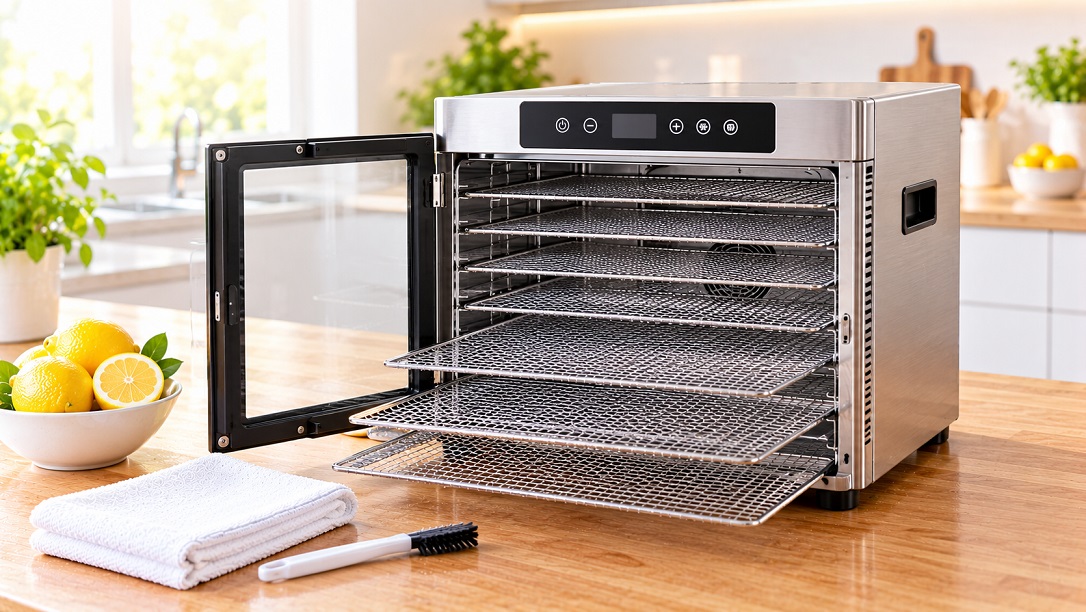
If you own an advanced large-capacity stainless steel commercial air oven style food dehydrator equipped with multiple wire baking racks and a front glass viewing window door, your sanitization routine must include specialized glass care.
During every baking cycle, immense grease pressure pushes oil droplets right onto the transparent glass door panel. If your plan on how to clean a food dehydrator skips this window, the grease will bake into a dark brown shield, blocking your view completely.
To execute a professional glass door cleanup, mix two tablespoons of baking soda with fresh water to create a smooth cream spread. Apply this cream directly onto the glass panel surface, ensuring the liquid does not seep into the double-paned door frame edges.
Activate a warm damp microfiber cloth to rub the paste in gentle circles, breaking down the baked-on grease layers without using dangerous razor blades. Wiping the pane clean five times with hot water shows you how to clean a food dehydrator glass assembly until the frames look bright, crystal clear, and professionally balanced.
🔍 Deep Dive: The Ultimate Commercial Degreaser Selection
When scaling up your cleaning routines, understanding the chemical structure of commercial degreasers is highly beneficial. Many cheap industrial formulas rely heavily on highly corrosive sodium hydroxide bases, which can strip oil quickly but will permanently destroy the fragile aluminum structural components inside home devices.
For residential countertop models, always look for enzyme-based or heavy-duty citrus-solvent degreasers. D-limonene, an organic solvent extracted directly from orange peels, cuts through ancient grease films efficiently while keeping the non-stick silicone rubber seals intact and perfectly elastic.
Furthermore, ensure you spray the formula onto dry surfaces only, as pooling water will dilute the organic chemical agents before they can dissolve the heavy carbon shells. By matching the right chemical solutions to your specific kitchen gear, you maximize performance longevity.
🔍 Deep Dive: Preventing Rust Formation on Steel Grates
A hidden hazard that home cooks encounter after discovering how to clean a food dehydrator is premature oxidation and red rust spots appearing along the metal welding seams of the inner crisping trays. This happens when moisture gets locked beneath the non-stick outer film coating.
To eliminate this hidden threat completely, never leave your freshly washed basket components to air dry overnight in a tightly sealed room or dark cabinets. The humid stagnant air pockets will attack the microscopic metal pores where the non-stick film has thinned down over long terms.
After wiping down the grates cleanly, always run a brief 3-minute empty dry heating cycle at 160 degrees Fahrenheit. This intense blast of dry heat instantly vaporizes every single micro-droplet of water trapped inside the rivet zones, keeping your steel cores completely rust-free.
🏆 Summary of Best Cleaning Practices
Mastering the art of how to clean a food dehydrator does not require expensive commercial technician visits or complicated laboratory tools. By simply soaking your appliance trays with dish soap or using natural baking soda paste every single month, you can completely eliminate carbonized grease crusts and protect your family from hidden bacteria or smoke hazards.
If your kitchen counter features a compact single-serve machine, utilizing natural vinegar steam cycles is a fantastic alternative that preserves internal components without scratching delicate coatings. Keeping your upper heating coils free from crumbs ensures your healthy cooking station delivers pristine utility every single day.
(Note: If you love processing your fresh, perfectly dried organic snacks into uniform, restaurant-style presentations for your healthy family meals, don’t forget to check out our expert-vetted guide on the best electric meat grinders for fast and effortless kitchen mincing preparation!)